Somru CRO

somruAdmin

Ultrasensitive Solutions for HCP Detection, Biomarker Analysis, and Biotherapeutic PK Quantitation

Now Streaming On-Demand Our platform represents a significant advancement in ultrasensitive bioanalytical detection by combining the precision of immunoassays with the amplification power of PCR/ dPCR. In this webinar, Ultrasensitive Solutions for HCP Detection, Biomarker Quantification, and Biotherapeutic PK, our experts will explain how the platform achieves attogram-level sensitivity across a wide range of applications. From host cell protein (HCP) detection in bioprocess monitoring to biomarker quantification and pharmacokinetic (PK) assessment of biologics, the technology enables accurate measurement of low-abundance analytes that traditional ELISA or ECL methods often fail to detect. Participants will gain insights into the scientific principles behind immuno-PCR, analytical validation strategies, and real-world case studies demonstrating its application in both research and regulated environments. Whether you are developing biotherapeutics, advancing biomarker programs, or improving process control, this session will demonstrate how our platform delivers the sensitivity, reliability, and scalability needed to strengthen bioanalytical workflows.             Watch Now!         Complete the form to view the recording.  
Innovative Solutions for Cell & Gene Therapy

Capabilities Highlights: Innovative Solutions for Cell & Gene Therapy This document highlights Somru BioScience’s capabilities in providing innovative solutions for cell and gene therapy (CGT). They offer bioanalytical and drug development services, emphasizing their expertise in molecular biology, immunogenicity, and regulated bioanalytical platforms. Explore the Full Whitepaper ! Email Address * Name   Powered by weForms

Pre-IND Planning for Biosimilar Development with Emphasis on Population PK

Pre-IND Planning for Biosimilar Development with Emphasis on Population PK This white paper from Somru BioScience focuses on the importance of early pre-Investigational New Drug (pre-IND) planning for biosimilar development, with a strong emphasis on Population Pharmacokinetics (PopPK). Key takeaways include: Importance of Pre-IND Planning: It’s a crucial foundational step for biosimilar development, establishing regulatory roadmaps, designing early clinical trials, aligning modeling strategies, and efficiently using resources. Explore the Full Whitepaper ! Email Address * Name   Powered by weForms

Population Pharmacokinetics (PopPK) in Biosimilar Studies:

Population Pharmacokinetics (PopPK) in Biosimilar Studies: Purpose, Challenges, Solutions, and Case Study This white paper by Somru BioScience discusses the purpose, challenges, solutions, and a case study related to Population Pharmacokinetics (PopPK) modeling in biosimilar studies.Key points include:Purpose of PopPK: It assesses similarity between biosimilars and reference products, supports indication extrapolation, optimizes study design, and helps handle complex kinetics, especially for therapeutic proteins.Challenges: These include inter-individual and immunogenicity variability (anti-drug antibodies), sparse data in Phase III studies, covariate imbalance, and difficulties in model selection and validation. Explore the Full Whitepaper ! Email Address * Name   Powered by weForms

Immunogenicity Prediction in Bi-Specific Antibody Engineering

Immunogenicity Prediction in Bi-Specific Antibody Engineering This white paper from Somru BioScience focuses on immunogenicity prediction in bi-specific antibody (bsAb) engineering. BsAbs, while powerful therapeutic proteins with dual-targeting capabilities, present unique immunogenicity challenges due to their complex structure. Explore the Full Whitepaper ! Email Address * Name Powered by weForms

Case Study: Application of In-Silico Immunogenicity Prediction at Lead Optimization Stage for Monoclonal Antibodies

Case Study: Application of In-Silico Immunogenicity Prediction at Lead Optimization Stage for Monoclonal Antibodies This white paper from Somru BioScience discusses the application of in-silico immunogenicity prediction during the lead optimization stage for monoclonal antibodies (mAbs). Explore the Full Whitepaper ! Email Address * Name   Powered by weForms

Automating Report Generation with AI: Unlocking Efficiency in Life Sciences and Beyond

Automating Report Generation with AI: Unlocking Efficiency in Life Sciences and Beyond This white paper from Somru BioScience discusses the automation of report generation using AI, particularly in the life sciences. It highlights that while AI is used in other areas of clinical trials, its application in report generation is still emerging. The paper outlines the benefits of AI in report automation, including structured content automation, regulatory language harmonization, real-time quality checks, end-to-end traceability, and personalized summaries. Explore the Full Whitepaper ! Email Address * Name Powered by weForms

AI-Driven QC Review: Enhancing Accuracy and Efficiency in Scientific Workflows

AI-Driven QC Review: Enhancing Accuracy and Efficiency in Scientific Workflows This white paper from Somru BioScience discusses how AI can enhance Quality Control (QC) review in scientific workflows. Traditionally, QC reviews are manual, time-intensive, and prone to error. AI can modernize these processes by automating the analysis of worksheets, comparing them against standard methods, and ensuring compliance. Explore the Full Whitepaper ! Email Address * Name   Powered by weForms

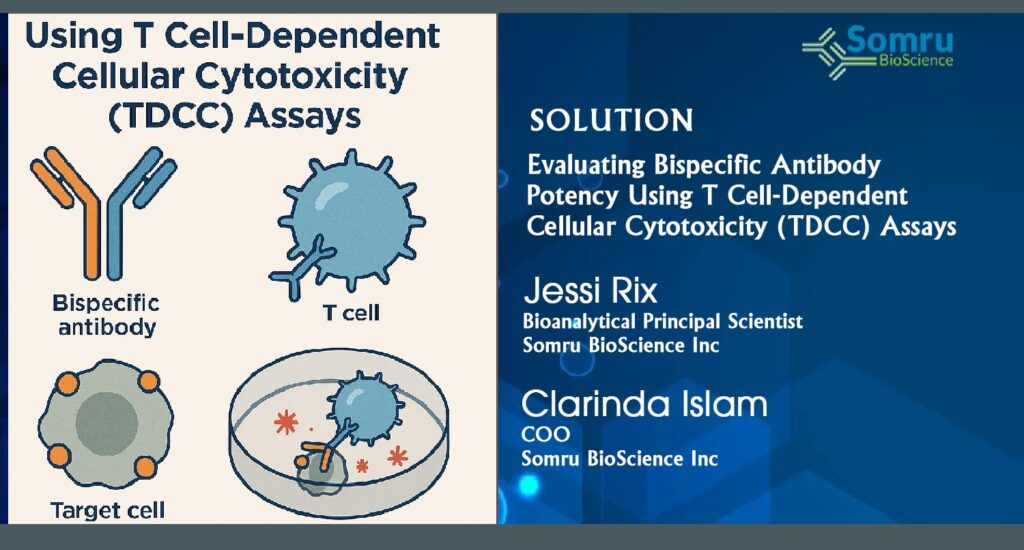
Evaluating Bispecific Antibody Potency Using T Cell-Dependent Cellular Cytotoxicity Assays

TDCC Assay: Revolutionizing Tumor Cell Cytotoxicity Assessment Discover how the TDCC (Target-Dependent Cell Cytotoxicity) assay offers a cutting-edge approach to evaluating antibody efficacy by accurately measuring immune-mediated tumor cell killing. This white paper explores the assay’s methodology, applications, and advantages in immuno-oncology research and therapeutic development. Explore the Full Whitepaper ! Email Address * Name Powered by weForms